
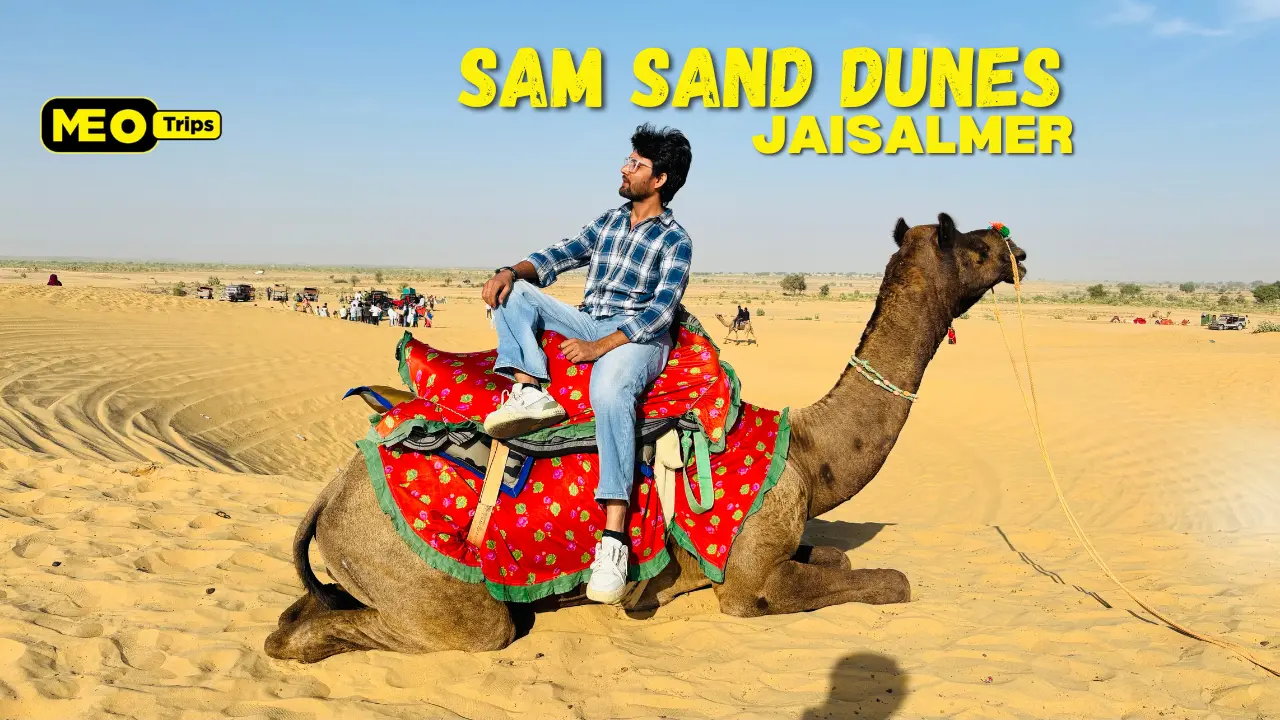
There are places you travel to, and then there are places you feel — Jaisalmer belongs to the second kind. In the heart of the Thar Desert, where golden sands shimmer under the sunlight and wind carries whispers of old Rajasthan, stands the great expanse of Sam Sand Dunes. Many call it the most mesmerizing desert stretch in India — endless curves of sand, camels walking in silhouette, sun melting like liquid gold into the horizon, music echoing across open skies, and nights lit not by city lamps but by a billion stars.
If you are planning a desert trip, Sam is not just an attraction — it is an experience that slowly sinks into your senses. This detailed guide has been written to give you everything you need to plan the perfect Jaisalmer desert journey — timing, pricing, what to expect, mistakes to avoid, how camping feels, what to eat, how to photograph dunes and even the places you should not leave without seeing. It reads slowly, like the desert itself — taking time to unfold.
What Makes Sam Sand Dunes Special?
Sam is where the desert breathes. Unlike tourist markets and forts inside the city, Sam remains wild and unfiltered. When you stand there, dunes stretch endlessly to the eye, shifting and reshaping every few hours as the wind plays sculptor. You see the world in shades of ochre, amber, honey and bronze. There is nothing blocking your view — no buildings, no traffic horns, no skyscrapers. Only nature.
The beauty of Sam is not only in what you see, but what you feel. Mornings are cool and quiet, with dew lightly touching the sand. As the day rises, heat begins to shimmer like a mirage. By sunset, the desert becomes a theatre — camels returning in long caravans, tourists gathered on ridges, the wind blowing sand like mist. At night, darkness becomes a blanket of stars. A fire crackles, musicians perform, dancers swirl like desert winds, dinner tastes smoky and earthy, and sleep comes soft like dunes themselves.
No photograph can capture this fully — Sam must be lived.
How to Reach Sam Dunes from Jaisalmer
Sam lies around forty kilometres from the main city, an easy drive through plains where shrubs replace trees and road gradually disappears into sand. You can hire a taxi, book a camp pickup jeep, or rent a bike if you want something more adventurous. The ride is simple — straight, open, free of traffic. Halfway through, mobile signals begin to drop, and that’s when you know you’re close.
Most travellers arrive in the late afternoon so they can watch the sunset. The return at night is possible, but staying in the desert is worth much more than just a short trip. Nights at Sam transform the desert into a world made of silence, firelight and stars.
Best Time to Visit — Season Matters More Than You Think
Weather determines your desert experience. If you choose right, Sam feels magical. Choose wrong, it becomes difficult.
From October to March, the desert comes alive. Days remain warm enough to enjoy camel rides comfortably, breeze feels pleasant, and nights are cool, sometimes cold. Camps are active, artists perform daily, food tastes better in the open air, and stargazing becomes a highlight. This is the time when photographs turn golden and memories last.
Summer, however, changes character. The months between April and July can be brutal. Heat touches fifty degrees, sand becomes too hot to walk barefoot, and the charm of outdoor camping fades because evenings remain warm. If you visit Sam in summer, go only for early morning or post-sunset safaris — never in afternoon.
Monsoon brings humidity and occasional rain. The desert still stands, but skies often remain dull. If you prefer absolute silence and fewer crowds, August or early September offers emptier dunes, but cultural programs remain limited.
The best moments of any day lie in sunrise and sunset. Sunrise feels soft and pink, with dunes glowing in pale gold. Sunset is dramatic — sharp colours, shadows, silhouettes, perfect for photographers and dreamers.
Camel Safari — A Journey Back in Time
The most iconic way to explore Sam is slow, rhythmic and timeless — riding a camel. Sitting atop a camel, you rise above dunes and float through wind. The pace is gentle, unhurried, almost meditative. You hear nothing but footsteps pressing into sand and wind moving across open desert. It feels like stepping into an old Silk Route caravan.
Camel safaris generally last between thirty minutes to two hours, depending on how deep you want to go. If you ride long enough, you reach dunes untouched by tourists — smooth like waves with no footprints interrupting the view. Guides are usually desert locals who know every dune as if it were memory. They talk softly, sometimes joking, sometimes sharing folk stories.
Prices vary with duration, season and negotiation. A short camel ride costs less, while dedicated sunset rides are more expensive — but the sunset ride is worth every rupee. When the sun sinks behind dunes and light turns copper, you will understand why this experience has lived for centuries.
Jeep Safari — Fast, Fierce, Unforgettable
If camel rides are poetry, jeep safaris are adrenaline. A jeep rushes across steep dunes like a roller coaster, engine roaring, sand flying, heart racing. The driver skids along slopes, climbs ridges, plunges down sudden drops. It is thrilling, slightly scary, and endlessly fun.
Most safari jeeps are 4×4 off-road vehicles driven by expert locals who know dune behaviour like sailors know tides. A 20–30 minute ride is exciting, but longer rides take you deeper into desert where isolation feels cinematic. Sunset dune bashing remains the highlight for groups of friends and adventure seekers.
This is not a ride for the faint-hearted — but if you like thrill, you will love it.
Desert Camping — The Memory You Will Carry Forever
A day trip to Sam is good.
A night in Sam is unforgettable.
Camping is where the desert shows its true soul. As evening falls, camps glow with lantern light and fabric tents sway gently in wind. Guests sit on rugs around a bonfire, musicians tune their instruments, dancers begin swirling with ghungroos chiming. The rhythm is ancient — desert songs passed down for generations.
Dinner is served under open skies — bajra roti, dal, churma, ker sangri sabzi, roasted starters straight from tandoor. Food tastes different in desert, as if smoke and sand carry flavour.
Later, silence arrives. Music fades. Fire burns low. You step away from camp and look up. No buildings, no electric glare — only a sky thick with stars. Some shining steady, some flickering like old memories. Milky Way sometimes becomes visible like a white river flowing above.
You sleep in soft desert air. In morning, a pale sun rises behind dunes, and world feels new.
Camping is not just stay — it is transformation.
Must-See Places Around Sam
Although Sam itself is the star, the region holds many stories.
Kuldhara Village, only twenty kilometres away, stands abandoned for over two hundred years. People say the village was cursed; some say they left to protect dignity. Walk through its broken houses and feel history breathe.
Farther ahead lies Tanot Mata Temple, near the Indo-Pakistan border. It survived bomb attacks during war — some shells fell, none exploded. Border officers still salute inside.
Close to Tanot is Longewala, where the 1971 war was fought. Tanks remain, preserved like metal ghosts of courage. There is a museum too — simple but powerful.
In Jaisalmer city, Sonar Quila — the Living Fort, rises like a golden crown. People still live inside; houses, temples, markets continue daily life. Narrow lanes smell of spices and sandstone. Haveli walls carved like lace, Gadisar Lake reflecting sunsets, bazaars filled with leather bags, mirror-work clothes, silver jewellery — the city whispers tales of Rajputana pride.
Sam is a desert dream; Jaisalmer is history made of gold.
Together they create a journey.
How Much Will a Trip to Sam Cost?
Costs shift depending on comfort and season, so rather than bullet points, here is a clearer picture:
A simple day trip — taxi + camel ride + sunset — can be done in a modest budget. You travel from Jaisalmer in afternoon, ride camel to watch sunset, return by night. Students and backpackers often choose this economical style of travel. You will spend comfortably without stress.
Then there are travellers who choose a tent — and that changes everything. A basic tent is simple, clean, practical, with dinner and folk music included. Families often book such stays. Prices vary, but accessible.
Luxury tents, however, create an entirely different world. These camps feel like royal desert retreats — big beds, attached washrooms, private seating decks, sometimes pool access, curated meals, private jeep rides. For couples or travellers celebrating something special, luxury tents feel magical and worth the price.
A desert trip can be low-budget or premium — the experience adapts to your style.
Travel Tips You Should Know (Explained Without Lists)
The desert is beautiful, but also raw. It demands respect. Carry a light scarf or stole — not just for style, but to protect from blowing sand. Wear sunglasses. Keep water handy. Sun in afternoon is strong, so avoid peak hours.
A camera is your best friend. The dunes change colours through the day — honey in morning, amber by noon, bronze in evening, silver in moonlight. Capture shadows — they create patterns. If you’re patient enough to wake at dawn, the first light on untouched sand looks like velvet.
Do not chase wildlife or climb steep dunes recklessly. Sand is soft — one wrong step sinks deep. Walk with care. Listen to locals — desert people know weather better than we do.
Be ready for silence. It is powerful.
Suggested Itinerary — Smooth and Balanced
Imagine this flow:
You arrive in Jaisalmer morning, check into hotel, explore Fort, see carvings of Patwon ki Haveli, eat at rooftop cafe watching city shine golden. Afternoon you leave for Sam. Wind cools, dunes begin to rise on horizon. You climb a camel, ride slowly to high dune, wait for sunset. World turns gold. Photos look unreal.
Evening you step into camp. Musicians begin. Dancers swirl like flames. You taste local dishes, talk to strangers who feel like friends. Night grows deeper. Stars multiply. You sit quietly for a moment, thinking how different life feels here.
Next morning you take a walk barefoot on cold sand. You drink tea while watching sun appear. After breakfast, visit Kuldhara, then Tanot and Longewala. Return with full heart.
Trips like this stay inside us for years.
Final Thoughts
Sam Sand Dunes is not just a destination — it is a pause in time. A place where modern busyness falls silent, and only wind speaks. You see culture not in museums but in music and dance, in food and stories, in laughter around bonfires.
This Jaisalmer Sam Sand Dunes Travel Guide: Best Time to Visit, Safari Prices, Camping Tips & Must-See Attractions was written to help you not only plan travel, but understand it. Sam isn’t meant to be rushed. You must slow down, sit on sand, feel grains slip through fingers, listen to silence. Desert teaches patience. It shows how beautiful emptiness can be.
Go with open heart.
Return with fuller one.
1. How far are Sam Sand Dunes from Jaisalmer city?
Around forty kilometres — less than an hour’s drive through open desert highway. Roads are smooth and travel feels scenic.
2. What is the ideal season to visit?
Between October and March. Winter skies are clearer, sand is cooler, cultural programs run full swing.
3. Are camel safaris worth it?
Absolutely. Nothing captures desert more authentically. Slow movement, tall view, calm silence — it’s a timeless memory.
4. Is jeep safari safe?
With trained drivers, yes. Choose reputable operators. Avoid unskilled drivers — dunes require control.
5. Can we stay overnight in tents?
Yes, and you should. Night camping brings music, dance, bonfire and stargazing — the soul of Sam.
6. What clothes should I carry?
Light cotton for day, warm jacket for night in winter. Desert can be surprisingly cold after dark.
7. Is food available in desert camps?
Yes. Camps provide buffet dinner and breakfast. Expect Rajasthani dishes like dal-baati-churma, ker-sangri, bajra roti.
8. Is Sam safe for solo travelers or couples?
Yes, extremely. Camps are well-organized, locals are warm. Just avoid isolated late-night wandering far from camp.
9. Are sunrise and sunset equally good?
Sunset is dramatic — popular with tourists. Sunrise is gentle — quieter, more spiritual. Both worth witnessing.
10. How many days are enough for Jaisalmer + Sam?
Two days minimum — one for city exploration, one for desert. Three days lets you breathe the experience fully.